
Outdoor Kitchen Appliances: Building a Luxury Grilling & Entertaining Space
Peak grilling season in Utah means triple-digit afternoons and evenings that finally cool off enough to enjoy. It is exactly the kind of climate that turns a patio into the busiest room in the house, and it is why so many homeowners across Utah, Idaho, and Wyoming are investing in a true outdoor kitchen instead of a grill parked against the house. The right outdoor kitchen appliances make that shift possible. A built-in grill, proper refrigeration, and a dedicated side burner turn a patio into a space where you can prep, cook, chill drinks, and entertain without a single trip back inside.
This guide walks through the appliances that matter most when planning a luxury outdoor kitchen, what to look for in each category, and how to think about layout before you buy. Whether you are starting with a single built-in grill or designing a full outdoor kitchen island, the goal is the same: appliances rated for outdoor life that perform as well as anything in your indoor kitchen.
What Belongs in a Luxury Outdoor Kitchen
Every well-planned outdoor kitchen is built around three categories of outdoor kitchen appliances: a built-in grill as the anchor, refrigeration to keep food and drinks on hand, and a side burner or secondary cooking surface for sauces, sides, and anything that does not belong directly on the grate. From there, homeowners add extras like pizza ovens, warming drawers, ice makers, or a kegerator depending on how they entertain. Getting the first three right is what makes the rest of the space functional rather than decorative.
Built-In Grills: The Heart of the Space
A built-in grill is the anchor of any outdoor kitchen, and it is worth spending the most time researching. Unlike a freestanding cart grill, a built-in unit is designed to be framed into an island, so fit, ventilation, and gas line placement all need to be planned in advance. MLD showrooms carry built-in grills from Lynx, Sedona by Lynx, DCS, Alfresco, Coyote, Delta Heat, Hestan Outdoor, Blaze, Kalamazoo, Twin Eagles, Viking, Dacor, and GE Monogram, which covers a wide range of price points and cooking styles.
Gas, Charcoal, or Hybrid
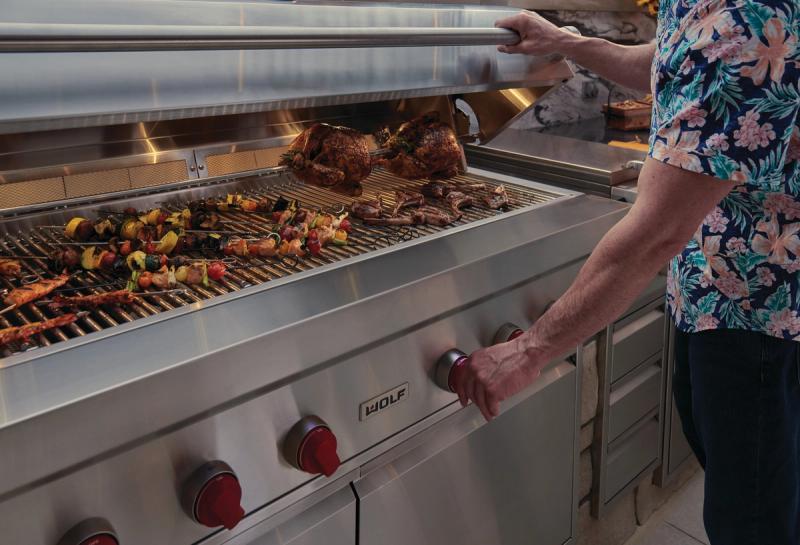
Most luxury built-in grills run on natural gas or liquid propane, which gives consistent heat and instant start-up. Natural gas is worth considering if a line is already run to the patio, since it removes the hassle of swapping propane tanks. Hybrid grills, like the Kalamazoo Hybrid Fire line, let you combine gas convenience with charcoal or wood flavor and even rotisserie cooking, which is a popular option for homeowners who want more versatility from one appliance.
Stainless Steel Grade
Outdoor stainless steel needs to survive sun, snow, and temperature swings, so grade matters. Look for 304-grade stainless steel or a brand's dedicated outdoor-rated stainless, rather than the lighter-gauge steel used on some indoor appliances. Lower grades will pit and discolor faster once they are exposed to the elements year-round, which is a real consideration in Mountain West weather.
Features Worth the Upgrade
Once fuel type and steel grade are settled, the differences between grill lines come down to features. Infrared sear zones, multiple burner tiers, rotisserie kits, and smoker boxes all add real cooking flexibility. Downdraft models, like the Jenn-Air Lanai, pull smoke and odor away from the cooking surface, which is worth a look if the grill sits close to seating or a covered patio. BTU output matters less than even heat distribution, so it is worth asking an appliance associate to walk through how a given model performs across the grate rather than just comparing BTU numbers on a spec sheet.
Outdoor Refrigerator: Keeping the Party Stocked
An indoor refrigerator will not survive outside. Compressors on indoor units are not built to run in high heat or freezing cold, and the cabinetry is not sealed against moisture, so an outdoor refrigerator is a genuinely different appliance rather than a repackaged indoor model. Outdoor-rated units are built with weatherproof seals and compressors engineered to keep working in wide temperature swings, which matters in a climate that can hit 100 degrees in July and well below freezing in January.
MLD carries outdoor refrigeration from Sub-Zero, U-Line, Summit, Coyote, Dacor, Perlick, and Avanti, in a range of formats. A 24-inch undercounter refrigerator is the most common choice for an outdoor kitchen island, but refrigerated drawers, compact all-refrigerator units, and even outdoor kegerators are available for homeowners who entertain often. If the outdoor kitchen sees regular use for parties, a dedicated beverage drawer or kegerator next to the main refrigerator keeps drink service separate from food storage, which speeds up the flow when guests are around.
Side Burners and Beyond
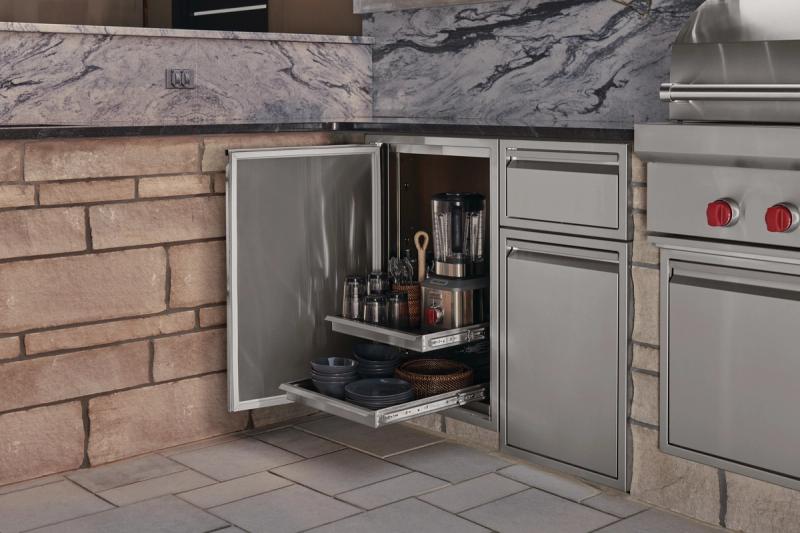
Side burners solve the problem every griller runs into eventually: sauces, vegetables, or a pot of anything do not belong on the main cooking grate. A side burner gives you a dedicated flame for sides, reductions, or even a full stovetop-style dish, without tying up the grill itself. Options range from a single burner integrated into the grill cart, like those on DCS or Broil King models, to standalone double side burners from Fire Magic, Viking, or Dacor for homeowners who want a true secondary cooking station.
Beyond side burners, the most common additions to a luxury outdoor kitchen are a pizza oven for wood-fired flavor, a warming drawer to hold food at temperature during longer entertaining, and an ice maker for parties that run all afternoon. None of these are required to call a space an outdoor kitchen, but they are the appliances homeowners most often say they wish they had added the first time around.
Designing the Layout Before You Buy
The appliances only perform as well as the space they are built into. Before selecting a built-in grill, outdoor refrigerator, or side burner, it helps to walk through a few planning questions with a showroom team that installs outdoor kitchens regularly.
- Where do gas and water lines currently run, and what will it cost to extend them to the kitchen location?
- Is the space covered or fully exposed? Covered patios open up more appliance options, since less of the unit sits in direct sun and snow.
- How much counter space sits between the grill, refrigerator, and side burner? A comfortable work triangle matters outside just as much as it does in a kitchen.
- Does the household entertain in groups of four or forty? That answer changes whether a single refrigerator drawer is enough or whether a kegerator and second refrigerator make sense.
These questions are exactly what an MLD account executive walks through during a showroom visit, since a fully functional outdoor kitchen starts with the infrastructure underneath it, not just the appliances on top.
Shopping for Outdoor Kitchen Appliances at MLD
MLD showrooms across Salt Lake City, Provo, Cedar City, Boise, Ketchum, and Jackson feature live, installed outdoor kitchen displays, so you can see a built-in grill lit, open an outdoor refrigerator door, and get a feel for a side burner before committing to a layout. Every appliance sold at MLD comes with a manufacturer warranty, and the length varies by brand, so it is worth discussing warranty coverage with an account executive as part of choosing between options.
Browse the full lineup of outdoor grills, refrigerators, and side burners online, or visit a nearby showroom to see them in person.
Frequently Asked Questions
What outdoor kitchen appliances do I need to get started?
At minimum, a built-in grill and an outdoor-rated refrigerator cover the core of most outdoor kitchens. A side burner is the next most common addition, followed by extras like a pizza oven or ice maker depending on how the space gets used.
Can I install indoor appliances in an outdoor kitchen?
No. Indoor appliances are not built to handle direct sun, moisture, or temperature extremes, and doing so will typically void the manufacturer's warranty. Always choose appliances rated specifically for outdoor installation.
What stainless steel grade should I look for in outdoor kitchen appliances?
304-grade stainless steel is the standard for outdoor-rated appliances, since it resists rust and corrosion far better than the lighter steel used on many indoor units.
Where can I see outdoor kitchen appliances in person before buying?
MLD showrooms in Salt Lake City, Provo, Cedar City, Boise, Ketchum, and Jackson all feature installed outdoor kitchen displays where you can test grills, refrigerators, and side burners before you buy.
Ready to start planning? Visit an MLD showroom or speak with an appliance associate to compare built-in grills, outdoor refrigeration, and side burners in person.