
Hardware Trends for 2026: The Details That Define a Luxury Home
In interior design, hardware is often treated as the last decision — the quick add-on after everything else is selected. In 2026, that approach is officially outdated.
Designers are increasingly treating cabinet pulls, door hardware, and plumbing fixtures as primary design decisions — chosen early, coordinated deliberately, and treated with the same intentionality as tile, cabinetry, and countertops. The reason is simple: hardware is the most touched, most noticed, and most personal element in any room.
At MLD, hardware is one of our three core product pillars — and 2026 has brought some of the most interesting and decisive hardware trends we've seen in years. Here's what's defining the category this year.
1. The Warm Metal Shift — From Accent to Architecture
If you track one macro trend across all hardware categories in 2026, it's this: warm metals have moved from accent status to architectural status. They're no longer the "pop" in a room dominated by cool finishes — they are the room's foundational finish language.
- Brushed brass: The most versatile warm metal in the 2026 market. Works in transitional, modern, and even Scandinavian-influenced kitchens. Its muted, non-reflective surface reads sophisticated rather than flashy.
- Champagne bronze: Slightly more golden and slightly warmer than brushed brass. The preferred finish for Mountain West luxury homes where the design direction leans into natural materials and warmth.
- Unlacquered brass: Living metal design — unlacquered brass develops a patina over time, aging beautifully. It's the antithesis of the uniform, mass-produced look, which is exactly why discerning clients are requesting it.
- Aged gold and antique brass: A step further into character. These finishes bring an almost antique quality that pairs exceptionally well with honed stone, dark wood, and jewel-toned cabinetry.
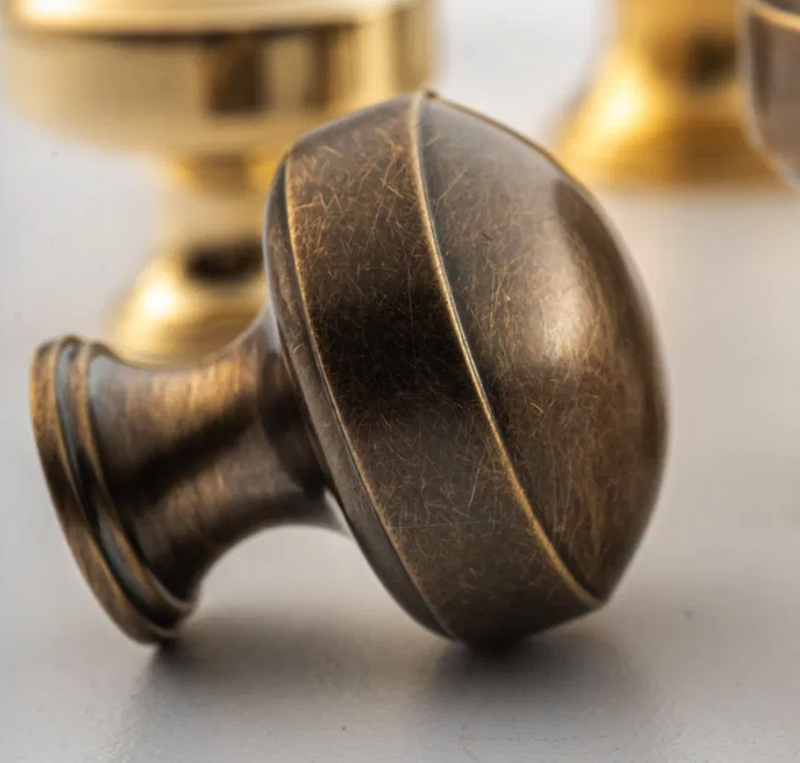
Chrome is not dead — but it's been repositioned. In 2026, polished chrome reads as either deliberately retro or as a functional-only choice. In luxury residential specification, it's largely been replaced by the warm metal family.
2. Mixed Metals: The Art of Intentional Contrast
Matching every fixture in a room to a single finish was the standard approach for decades. In 2026, that rule has been retired — and in its place is a more sophisticated, curated approach: mixed metals.
The principle is straightforward: choose a primary finish that anchors the space (typically a warm metal on cabinetry), then introduce a secondary finish in a controlled, intentional way. The result feels layered and personal rather than showroom-coordinated.
How to execute mixed metals well:
- Limit to two finishes per space. Two reads curated — three or more reads chaotic.
- Apply the primary finish to the majority of cabinet hardware and door hardware.
- Use the secondary finish on faucets, lighting fixtures, or a single statement piece (island pulls, range hood strapping).
- Warm + matte black is the most popular pairing: brushed brass cabinet pulls with a matte black faucet, or champagne bronze hardware with a flat-black range hood.
- Warm + cool contrast (brass + polished nickel) works when the goal is a softer, more classic sophistication.
Designer Pro Tip: Present Two Finish Packages to Clients
Rather than presenting hardware options one piece at a time, build two complete 'finish packages' — for example, a Warm Brass Package and a Mixed Metal Package — and present them side by side. Clients can visualize the full room and make decisions faster. MLD's showrooms are ideal for this kind of side-by-side comparison because hardware is displayed in context, not in isolation.
3. Texture and Tactility: Hardware You Can Feel, Not Just See
One of the defining aesthetic shifts of 2026 is the move toward hardware that engages multiple senses. Beyond visual finish, the texture and feel of hardware in the hand has become a primary selection criterion — especially in luxury residential projects where the client is expected to interact with these pieces dozens of times a day.
The key textures gaining momentum:
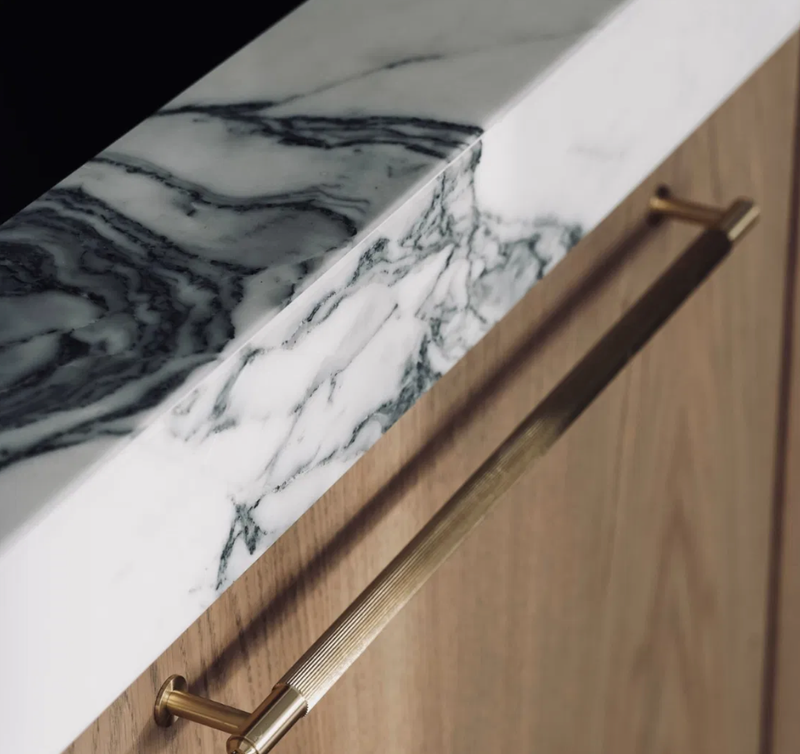
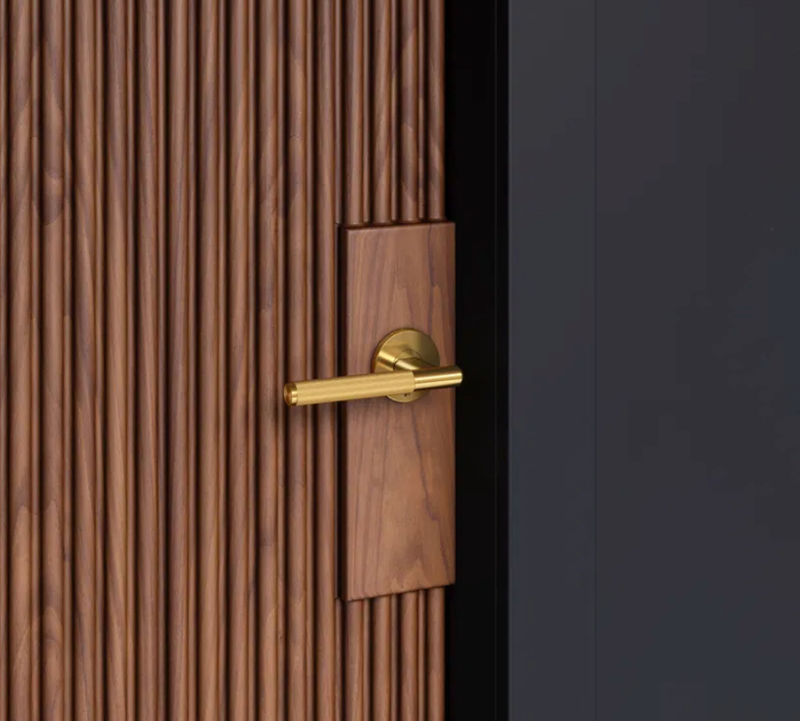
- Knurled grips: The cross-hatch, diamond-cut pattern borrowed from high-end industrial tools. Now appearing on cabinet pulls, door levers, and faucet handles. Adds visual shimmer and a deeply satisfying tactile experience.
- Hammered surfaces: Hand-hammered knobs and pulls bring an artisanal, "perfectly imperfect" quality that mass-produced hardware can't replicate. Strong in transitional and organic-modern kitchens.
- Fluted details: Vertical channel texture, borrowed from glasswork and ceramics, is appearing on hardware in both metal and mixed-material formats. Particularly strong in bathrooms where it echoes fluted glass sconces and ribbed tile.
- Cast bronze and iron: Hardware that shows visible casting marks and surface variation is gaining traction as clients move away from the sterile precision of CNC-machined pulls and toward pieces with human character.
4. Scale Is Getting Bolder: The Case for Oversized Pulls
The era of the diminutive 3-inch bar pull is winding down. In 2026, hardware is scaling up — and not just for aesthetic reasons.
Oversized pulls (6", 8", 12", and even full-door pulls) offer genuine functional advantages: they're easier to grip, easier to open with a full hand, and they make drawers and doors read more intentionally. On wide pot-and-pan drawers, a longer pull is the obvious ergonomic choice. On tall pantry doors or integrated appliance panels, a single long pull creates a strong vertical line that emphasizes height and architectural quality.
- Bank of drawers: Use a consistent pull length across all drawers for a rhythm that reads intentional and custom.
- Cabinet doors: Shorter pulls or knobs maintain proportion — the contrast between drawer pulls and door pulls is part of the design.
- Pantry and tall cabinets: A single extra-long pull (12"–24") running the full height of the door is a signature detail in high-end kitchen design.
- Integrated appliance panels: Matching the panel-front pull to your cabinet hardware creates a seamless, architect-kitchen aesthetic.
5. The 'Modern Heritage' Aesthetic: Classic Forms, Contemporary Execution
One of the strongest macro trends running through 2026 interior design is what designers are calling 'Modern Heritage' — a sensibility that blends traditional craftsmanship and classic forms with modern function and material quality. In hardware, this translates directly into specific shapes and finishes.
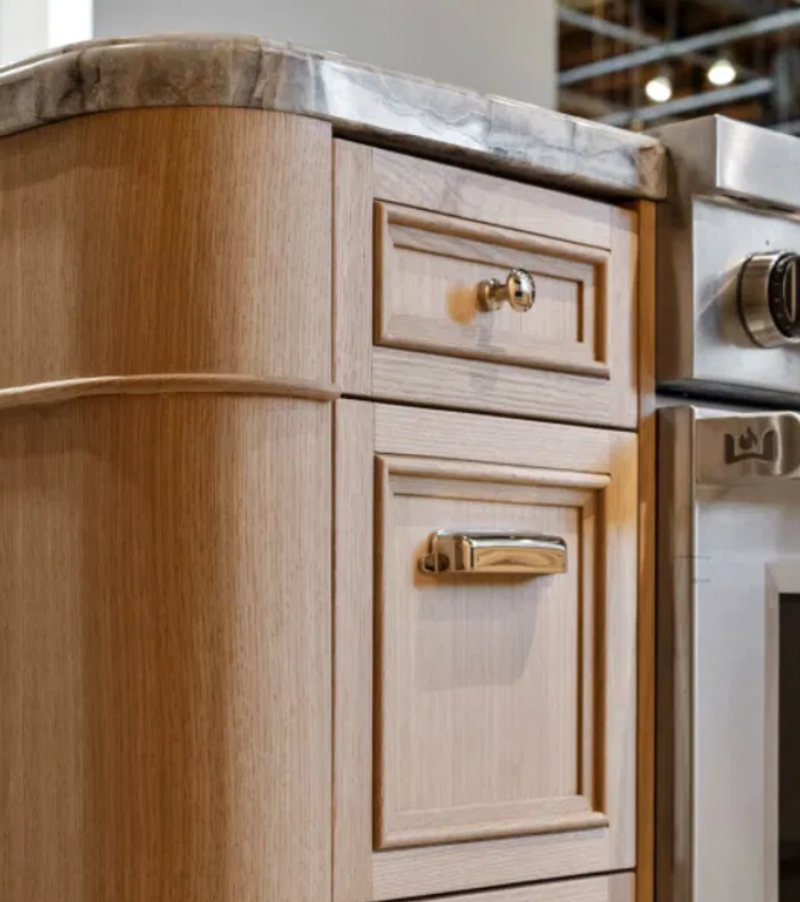
- Cup pulls: One of the most enduring cabinet hardware forms — concave, handle-like pulls that originated in furniture design. In 2026, cup pulls are experiencing a significant revival in warm metals and hammered finishes. Particularly strong on lower cabinet banks and islands.
- Cremone bolts: Long vertical bolt-style hardware that spans the full height of a cabinet door. Traditionally used on armoires and French doors, now appearing in luxury kitchens as a statement detail on pantry banks and glass-front cabinets.
- Backplates: Hardware with a visible mounting plate behind the knob or pull. Backplates frame hardware, add visual weight, and read as a more considered, finished detail than exposed screws.
- Round knobs with character: Simple round knobs in aged or hammered finishes are returning as an alternative to bar pulls in kitchens that lean traditional, transitional, or country-influenced.
6. Door Hardware: The Most Underestimated Design Decision in the Home
Cabinet hardware gets the most attention, but door hardware — knobs, levers, hinges, and entry hardware — makes a statement the moment anyone enters a room. In luxury residential design, door hardware is increasingly specified with the same intentionality as cabinet hardware, and the disconnect between the two is a detail that separates thoughtful design from incomplete design.
What to know about door hardware in 2026:
- Lever handles are overtaking round knobs: Ergonomic and architecturally stronger, lever handles in solid metal (brass, bronze, nickel) are the dominant door hardware form in luxury residential projects.
- Match the family, not the exact finish: Door hardware doesn't need to match cabinet hardware exactly — but it should be from the same finish family (warm metals together, cool metals together) to create cohesion through the home.
- Entry hardware as architecture: The front door handle is a home's first design statement. In 2026, oversized, solid-metal entry pulls and levers in sculptural forms are making strong impressions — especially in Mountain West luxury homes where architectural exterior design is a priority.
- Hinge visibility: Exposed brass or bronze hinges are becoming a deliberate design detail rather than something to hide. Matching hinge finish to knob or lever finish completes the hardware story on every door.
7. Coordinating Hardware Across the Home: The MLD Approach
The most sophisticated Mountain West homes in 2026 treat hardware as a whole-home design language — not a room-by-room decision. This means the finish family established in the kitchen flows through to bathroom faucets, cabinet hardware, door levers, and even lighting fixtures.
MLD's hardware and plumbing catalog is structured to support exactly this kind of whole-home coordination. Because we carry appliances, plumbing, and hardware under one roof, your design team can align appliance handle finishes, faucet metals, cabinet pulls, and door hardware in a single appointment rather than sourcing from three different vendors.
Whole-Home Finish Coordination at MLD
Bring your designer or contractor to any MLD showroom and our team can walk through finish coordination across all three product categories — appliances, plumbing, and hardware — at once. This is one of the clearest advantages of working with a multi-category showroom rather than category specialists.
Elevate Your Space with Hardware That Means Something
Hardware is the detail that most people can't quite name but always feel. The right pulls make a kitchen feel finished. The right lever makes a door feel substantial. The right finish ties a home's design story together from room to room.
At MLD, our hardware catalog spans the full range of what's defining luxury residential design in 2026 — from warm brass cup pulls to sculptural entry hardware. Visit any of our six Mountain West showrooms to experience it in person.