
Designing the Whole Home: How to Coordinate Appliances, Plumbing & Hardware Finishes
Finish decisions tend to get made one room at a time. A faucet gets picked for the kitchen, cabinet pulls get chosen a few weeks later, and the appliance package gets ordered separately, often by a different person entirely. The result is a home that looks finished room by room but never quite reads as one home.
A design guide built around matching appliance and plumbing finishes takes a different approach. Instead of treating hardware as a series of individual purchases, it treats the entire home as one finish story, carried consistently from the kitchen faucet to the bathroom vanity to the door hardware in the hallway between them. Getting this right is less about matching every single piece and more about being intentional with the palette from the start.
Start With a Whole-Home Finish Strategy
The most cohesive homes are planned with hardware as a whole-home design language, not a room-by-room decision. That means choosing a finish family before the first faucet is ordered, then referring back to it every time a new fixture, pull, or appliance gets specified.
This matters most in open-concept homes. When the kitchen, dining, and living areas flow into one another, any inconsistency in visible metal finishes (a lighting fixture in one tone, cabinet hardware in another, appliance trim in a third) stands out immediately. In a home with more defined rooms, there's a bit more room to vary finishes from space to space, but the overall palette should still feel related.
Choosing a Dominant Finish
The simplest and most reliable method is to pick one dominant metal finish and build the home around it. If the kitchen faucet is brushed nickel, the cabinet hardware, light fixtures, and appliance accents follow in the same tone. It's a straightforward approach and one that ages well, since nothing in the home will feel dated on its own timeline.
Warm metals are leading the way in current finish selections: brushed brass, champagne bronze, polished nickel, and aged, unlacquered brass in particular. Unlacquered brass has become a favorite for exactly the reason some homeowners hesitate on it: it develops a natural patina over time, so the finish actually gains character rather than just showing wear.
For a closer look at how to build this kind of finish plan from the ground up, MLD's guide on how to choose decorative plumbing and hardware for a cohesive home design walks through the selection process room by room.
The Case for Mixed Metals
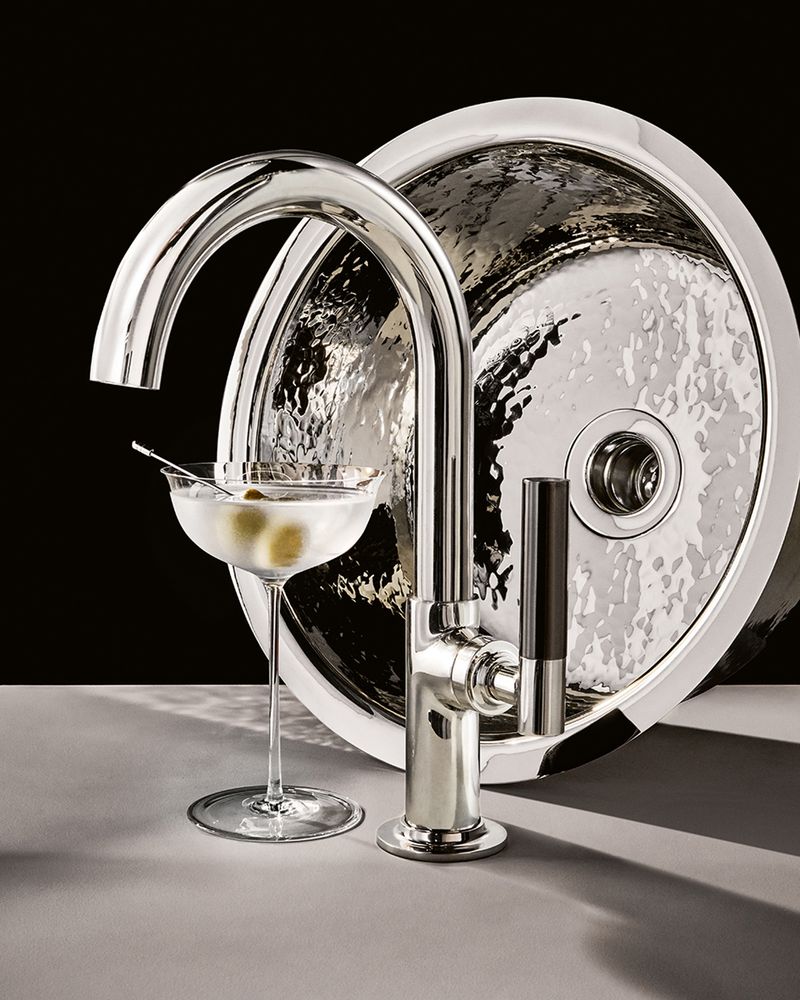
Matching every finish in the house is one approach. Mixing them, done well, is another, and it's increasingly the choice designers are making in kitchens and primary bathrooms. The old rule was to match every metal in a room. The current approach favors thoughtful contrast instead.
Mixed metals work when there's a clear relationship between the finishes chosen, not when three or four unrelated tones end up in the same space by accident. A few pairings that hold up consistently:
- Matte black faucet with brushed gold cabinet hardware
- Brushed nickel faucet with oil-rubbed bronze accessories
- Brushed brass cabinet hardware against matte black or polished nickel fixtures
The easiest way to keep a mixed-metal room from feeling chaotic is to pick a primary finish for most of the space (cabinet pulls and drawer hardware, for example) and introduce a secondary finish in one controlled location, like an island, a pantry wall, or a single statement fixture. Two finishes is usually the limit for most homes. A third can work, but it takes a more practiced eye to pull off.
Matching Appliances to Plumbing and Hardware Finishes
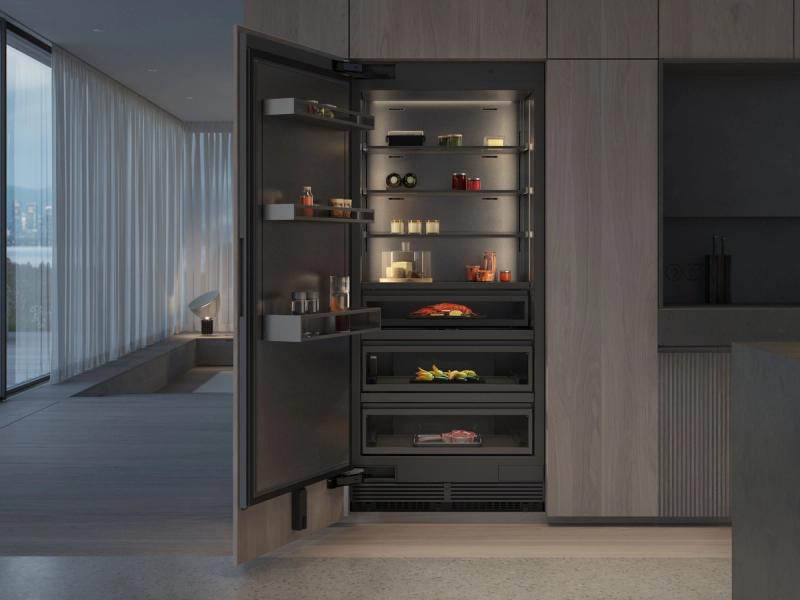
Appliances are often the piece left out of the finish conversation, ordered separately and on a different timeline from cabinetry and plumbing. But appliance handles, knobs, and trim are just as visible as any faucet or cabinet pull, and coordinating them makes the biggest difference in whether a kitchen feels custom-built or assembled from a catalog.
Matching or complementing appliance hardware with cabinet hardware is one of the simplest upgrades available in a kitchen remodel. A refrigerator handle in the same finish as the surrounding cabinet pulls reads as intentional. A mismatched one reads as an afterthought, even in an otherwise well-designed space.
Where Finishes Should (and Shouldn't) Match
Not every fixture in the home needs to match exactly, and trying to force that can actually work against the design. A few guidelines that hold up across most projects:
Plumbing fixtures within the same room (faucet, shower system, tub filler) should generally share a finish family, even if they're not the exact same product line. Cabinet and door hardware can vary slightly from plumbing finishes as long as the undertone (warm versus cool) stays consistent. Lighting has the most flexibility, since it's often viewed from a distance and reads more as a fixture than a finish.
The common thread across all of it: consistency in undertone matters more than matching every product exactly. A warm brass faucet and a warm champagne bronze cabinet pull will feel coordinated even though they're not identical.
Working With a Design Team
Coordinating finishes across appliances, plumbing, and hardware is easiest when it happens early, with one team looking at the whole plan rather than each category being sourced independently. A plumbing and design specialist can map out the finish palette before individual pieces are ordered, which avoids the mismatched fixtures and last-minute substitutions that tend to happen when selections are made room by room under deadline pressure.
MLD's plumbing design services walk homeowners through exactly this kind of whole-home planning, from initial finish selection through final fixture installation.
Bringing the Finishes Together
A cohesive home doesn't happen by accident. It comes from treating appliance, plumbing, and hardware finishes as one decision instead of three separate ones, made early enough in the process that every later selection has something to match or intentionally contrast against.
Whether the plan is a single dominant finish throughout or a considered mix of two warm metals, the goal is the same: a home that feels like it was designed as a whole, not assembled room by room. Start the finish conversation early, work from a defined palette, and let every fixture, pull, and appliance accent support the same design story.